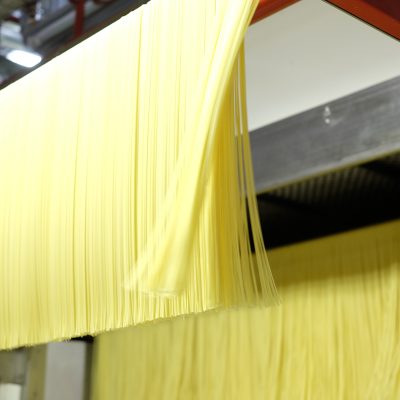

Focus on the Italian artisan pasta making sector

The sector of Italian artisan pasta makers represents a structural component of the national agri‑food system, while at the same time being characterised by a productive fragmentation that makes statistical measurement and the definition of clear sectoral boundaries complex. The pasta industry as a whole is one of the pillars of Italian food exports, yet within it coexist profoundly different production models: on the one hand, high‑capacity, highly automated, volume‑oriented industrial plants; on the other, a constellation of micro‑enterprises, workshops and artisan pasta makers operating on a small scale, with labour‑intensive processes and strong territorial roots.
From an economic standpoint, the artisan segment occupies a high value‑added niche: although it accounts for a marginal share of total volumes, it captures premium demand segments – both domestic and international – thanks to distinctive production features (bronze‑drawing, slow drying, selection of high‑quality grains, codified regional recipes). This configuration results in a competitive positioning based not on scale, but on qualitative differentiation, territorial reputation and the ability to serve consumer segments with a high willingness to pay.
Subscribe to the magazine to read the full article
Other Articles